Upto 51% OFF & FREE UK-MAINLAND DELIVERY ON ALL ORDERS
Welding Safety Guide — Essential PPE and Safe Practices
Welding is one of the most rewarding skills you can learn — but it comes with genuine hazards that must be respected. Arc flash, UV radiation, toxic fumes, fire risk, and electrical shock are all real dangers that proper safety practices eliminate. This guide covers everything you need to stay safe.
The Hazards of Welding
Understanding the hazards is the first step to managing them effectively:
Arc flash and UV radiation: The welding arc produces intense ultraviolet and infrared radiation — far more intense than direct sunlight. Even a brief glance at an unprotected arc causes arc eye (photokeratitis) — an extremely painful condition similar to severe sunburn on the cornea. Skin exposed to arc radiation burns like severe sunburn.
Welding fumes: Welding produces fumes containing metal oxides, flux vapours, and shielding gas breakdown products — many of which are toxic with prolonged exposure. Manganese from mild steel welding, chromium from stainless steel, and zinc from galvanised steel are particularly hazardous.
Fire and explosion: The welding arc and spatter can ignite flammable materials. Welding near flammable liquids, gases, or materials is extremely dangerous.
Electrical shock: Welding machines operate at voltages that can cause serious injury — particularly in wet or damp conditions.
Burns: Hot metal, spatter, and contact with the electrode holder are all burn risks.
Essential Welding PPE
Welding helmet: The most important piece of welding PPE. Protects eyes and face from arc flash, UV radiation, and spatter.
- Fixed shade lens — traditional helmet with a fixed shade glass. Cheap and reliable but you need to flip the helmet to see your workpiece before striking the arc.
- Auto-darkening helmet — switches from clear to welding shade in milliseconds when the arc strikes. More expensive but significantly more convenient and generally produces better welds as you can see the joint clearly before starting.
Shade numbers for arc welding:
- MMA welding — Shade 10-11
- TIG welding — Shade 9-12 depending on amperage
Welding gloves: Heavy leather gauntlet-style gloves that protect hands and forearms from spatter, heat, and UV radiation. MMA welding gloves are thick and heat-resistant. TIG welding gloves are thinner to allow the dexterity needed for feeding filler rod.
Welding jacket or sleeves: Protect arms and torso from spatter and UV radiation. Leather is the traditional material — heavy cotton or flame-resistant synthetic materials are also used. Never weld in synthetic clothing — it melts and fuses to skin.
Welding boots: Steel-capped, leather, with no exposed lacing that spatter can land in. Never weld in trainers or canvas shoes.
Ear protection: Grinding, chipping slag, and some welding processes produce significant noise — wear ear defenders or plugs.
Ventilation — Critical for Health
Welding fumes are serious — long-term exposure causes respiratory disease, and some welding fumes are classified as carcinogenic.
Minimum requirements:
- Never weld in an enclosed space without mechanical ventilation
- Position yourself to avoid breathing the fume plume — always weld so the fumes rise away from your breathing zone
- Use local exhaust ventilation (LEV) — a fume extraction hood positioned close to the arc — for regular welding
Particular hazards:
- Stainless steel — produces hexavalent chromium fumes, a known carcinogen. Always use LEV and respiratory protection when welding stainless
- Galvanised steel — zinc oxide fumes cause metal fume fever — a flu-like illness. Avoid welding galvanised if possible, or use maximum ventilation
- Painted or coated metals — remove coatings from the weld area before welding. Many coatings produce highly toxic fumes
Fire Prevention
- Clear the welding area of all flammable materials within a 3-metre radius
- Cover flammable items that can't be moved with fire-resistant welding blankets
- Never weld near petrol, solvents, or flammable gases
- Have a fire extinguisher within reach — CO2 or dry powder extinguisher suitable for electrical fires
- Check the area for smouldering after finishing — spatter can lodge in cracks and smoulder for hours before igniting
Electrical Safety
- Never weld in wet or damp conditions
- Ensure the workpiece is properly earthed — connect the earth clamp directly to the workpiece or the welding table, as close to the weld as practical
- Never wrap the welding cable around your body
- Inspect cables and connections before each use — replace damaged cables immediately
- Switch off the welder when changing electrodes or adjusting connections
- The TEH TWT200 and TEH TWA280 both feature IP21 protection — protected against dripping water — but are not rated for use in wet conditions
Setting Up Your Welding Area
- Work on a metal welding table or fire-resistant surface — never on wood
- Position the welder on a stable, flat surface away from the weld area
- Ensure cables are laid out to avoid tripping hazards
- Keep the welding area tidy — clutter increases the risk of accidents
- Ensure adequate lighting — you need to see what you're welding clearly
For TIG Welding — Additional Considerations
TIG welding uses argon shielding gas:
- Store gas cylinders upright and secured — a falling cylinder is extremely dangerous
- Always close the cylinder valve when not in use
- Never use oxygen instead of argon — this is extremely dangerous
- Check connections for leaks before use
- Argon displaces oxygen — ensure ventilation even though argon itself is non-toxic
TEH Welding Range:
| Model | Process | Max Output | Best For |
|---|---|---|---|
| TWA280 MMA140 | MMA only | 140A | General fabrication, site work, beginners |
| TWT200 | TIG + MMA | 200A TIG / 160A MMA | Precision work, stainless, aluminium |
Both feature IGBT inverter technology, wide voltage tolerance (AC160-270V), CE certification, and digital current displays.
Browse our full welding range at tehtools.co.uk
Sold out
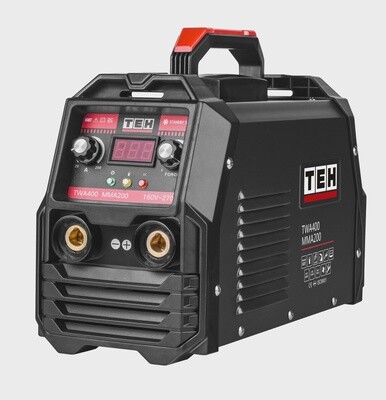
200Amp Inverter Welder MMA Machine IGBT
200Amp Inverter Welder MMA Machine IGBT
SKU TWA400
was £220.83
Save 59%
£90.83
Out of stock
On Sale
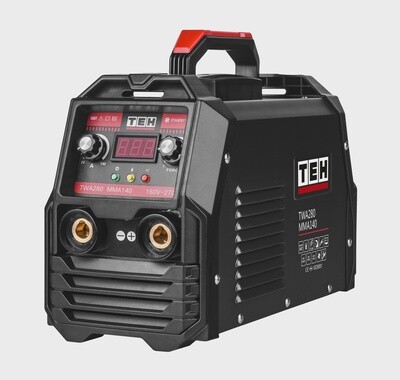
TEH TWA280 MMA 140A Inverter Stick Welder | IGBT DC | Digital Display | Wide Voltage 160-270V | CE Certified | Home & Workshop
TEH TWA280 MMA 140A Inverter Stick Welder | IGBT DC | Digital Display | Wide Voltage 160-270V | CE Certified | Home & Workshop
MMA 140A IGBT Inverter | DC Output | Digital Current Display | Arc Force Adjustment | Wide Voltage 160-270V | CE Certified | 2 Year Warranty
SKU TWA280
was £179.17
Save 56%
£79.17
On Sale
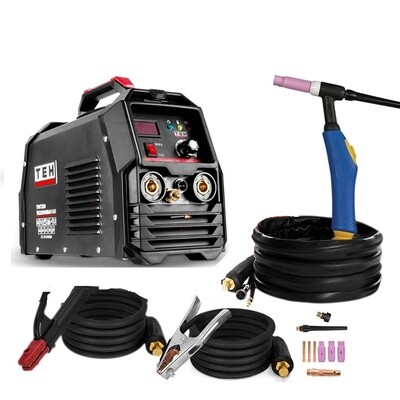
TEH TWT200 TIG 200A MMA 160A Inverter Welder | IGBT | Digital Display | Wide Voltage 160-270V | Home & Workshop
TEH TWT200 TIG 200A MMA 160A Inverter Welder | IGBT | Digital Display | Wide Voltage 160-270V | Home & Workshop
TIG 200A & MMA 160A | IGBT Inverter | Digital Current Meter | Arc Force Adjustment | Full Kit Included | Wide Voltage 160-270V | 2 Year Warranty
SKU TWT200
was £270.83
Save 49%
£137.50
Display prices in:GBP