Upto 51% OFF & FREE UK-MAINLAND DELIVERY ON ALL ORDERS
CFM vs L/min Explained — What Air Compressor Specs Actually Mean
Air compressor specifications can be confusing — especially when different manufacturers use different units. CFM, L/min, FAD, Bar, PSI, max displacement — what does it all actually mean? This guide explains every key air compressor specification in plain English so you can make a confident buying decision.
CFM — Cubic Feet per Minute
CFM measures the volume of air a compressor delivers per minute. It's the most important performance figure for matching a compressor to your tools because your tools need a minimum CFM to operate properly.
There are two CFM figures you'll see:
Max displacement CFM — the theoretical maximum the pump can move under no load and no pressure. This is the best-case figure and not what your tools actually receive.
FAD CFM (Free Air Delivery) — the actual volume of air delivered at a specific working pressure. This is the honest, real-world figure. Always use FAD when comparing compressors to your tool requirements.
Example: The TEH TAC50L has a max displacement of 14.8 CFM but a FAD of 8.5 CFM at 6 Bar and 7.0 CFM at 8 Bar. The FAD figures are what matter for running your tools.
L/min — Litres per Minute
L/min is simply CFM expressed in metric units. They measure the same thing — the volume of air delivered per minute.
To convert: 1 CFM = approximately 28.3 L/min
So 7.0 CFM = approximately 200 L/min. UK manufacturers often use L/min while US manufacturers tend to use CFM — now you know they're the same measurement in different units.
FAD — Free Air Delivery
FAD is the most honest and useful airflow figure. It tells you the actual volume of usable air the compressor delivers at a specific pressure under real working conditions — accounting for heat, friction, and mechanical losses.
Always look for FAD figures at the pressure you'll actually be working at. Most tools operate between 5-8 Bar so check the FAD at 6 Bar and 8 Bar when comparing compressors.
Bar and PSI — Pressure
Bar and PSI both measure air pressure — they're just different units.
1 Bar = 14.5 PSI
Most UK pneumatic tools operate between 5-8 Bar (72-116 PSI). Most TEH compressors have a maximum pressure of 8 Bar (116 PSI) which covers the full range of standard pneumatic tools.
Higher pressure isn't always better — running tools at higher pressure than they need wastes air and shortens tool life. Match your compressor output pressure to your tool's recommended operating pressure.
Tank Size — Litres
The tank stores compressed air as a buffer between the motor cycling and your tool demand. A larger tank means:
- More reserve air for burst demand tools like impact wrenches
- Less frequent motor cycling for extended continuous use
- More consistent pressure during heavy use
Tank size does NOT determine how much air the compressor produces — that's determined by the motor and pump (FAD). A large tank with a weak pump will still starve a high-demand tool.
HP — Horsepower
HP indicates the motor power. More HP generally means more airflow capacity. Our range goes from 2HP (TAC24L) through 2.5HP, 4HP (TAC50L twin motor), 6HP (TAC100L triple motor) to 8HP (TAC130L quad motor).
Duty Cycle
Some compressors are rated for intermittent use and need rest periods. Most TEH oil-free compressors are designed for continuous professional use — check the product specifications if duty cycle is important for your application.
Quick Reference — TEH Tools Compressor Specs:
| Model | HP | FAD @ 6 Bar | FAD @ 8 Bar | Tank | Noise |
|---|---|---|---|---|---|
| TAC24L | 2.5HP | 120 L/min (4.2 CFM) | 100 L/min (3.5 CFM) | 24L | 75-80dB |
| TAC50L-M1 | 2HP | 120 L/min | 100 L/min (3.5 CFM) | 50L | Low noise |
| TAC50L | 4HP | 240 L/min (8.5 CFM) | 200 L/min (7.0 CFM) | 50L | 80-85dB |
| TAC100L | 6HP | 360 L/min (12.7 CFM) | 300 L/min (10.6 CFM) | 100L | 75-100dB |
| TAC130L | 8HP | 480 L/min (17.0 CFM) | 400 L/min (14.1 CFM) | 130L | 75-110dB |
The Bottom Line
When buying an air compressor always check:
- FAD at working pressure — not max displacement
- FAD must exceed your tool's CFM/L/min requirement
- Tank size for your usage pattern
- Noise level if working indoors or in residential areas
Browse our full compressor range at tehtools.co.uk
NEW in
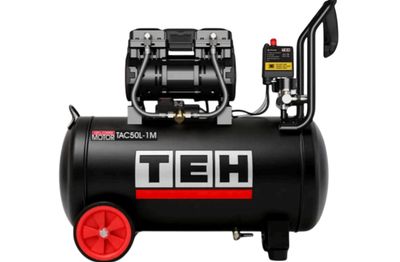
TEH 50L Oil-Free Air Compressor 1500W 2HP | Dual Gauge 250 L/min | 8 Bar 116 PSI | Trade & Professional Use
TEH 50L Oil-Free Air Compressor 1500W 2HP | Dual Gauge 250 L/min | 8 Bar 116 PSI | Trade & Professional Use
Supports Single & Multi-Tool Operation — Perfect for Workshop, Trade & Clean Air Applications.
SKU TAC50L-M1
£199.17
NEW in

TEH LAC3L Cordless Battery Air Compressor 3L | 7 Bar 101 PSI | 30 L/min | Tyre Inflation & Emergency Roadside Use
TEH LAC3L Cordless Battery Air Compressor 3L | 7 Bar 101 PSI | 30 L/min | Tyre Inflation & Emergency Roadside Use
Cordless & Battery Powered | 7 Bar 101 PSI | 30 L/min | Car Tyres, Bikes, Sports Equipment & Light DIY | Emergency Roadside Ready
SKU LAC3L
was £332.50
Save 38%
£207.50
On Sale
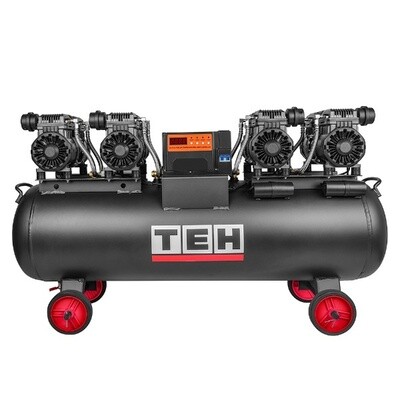
TEH TAC130L 130L Oil-Free Air Compressor Quad Motor 8HP | 400 L/min 14.1 CFM FAD | 8 Bar 116 PSI | Intelligent Controller | Industrial & Bodyshop
TEH TAC130L 130L Oil-Free Air Compressor Quad Motor 8HP | 400 L/min 14.1 CFM FAD | 8 Bar 116 PSI | Intelligent Controller | Industrial & Bodyshop
Quad Motor 8HP | 400 L/min 14.1 CFM FAD @ 8 Bar | Runs Full-Size HVLP, Multiple Orbital Sanders & Up To 6 Simultaneous Tools | Intelligent Controller
SKU TAC130L
was £1 374.17
Save 46%
£745.83
On Sale
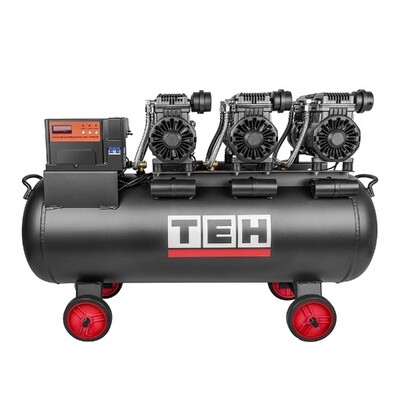
TEH TAC100L 100L Oil-Free Air Compressor Triple Motor 6HP | 300 L/min 10.6 CFM FAD | 8 Bar 116 PSI | Intelligent Controller Industrial Use
TEH TAC100L 100L Oil-Free Air Compressor Triple Motor 6HP | 300 L/min 10.6 CFM FAD | 8 Bar 116 PSI | Intelligent Controller Industrial Use
Triple Motor 6HP | 300 L/min 10.6 CFM FAD @ 8 Bar | Runs Full-Size HVLP, Orbital Sanders & Up To 4 Simultaneous Tools | Intelligent Controller
SKU TAC100L
was £912.50
Save 37%
£579.17
On Sale
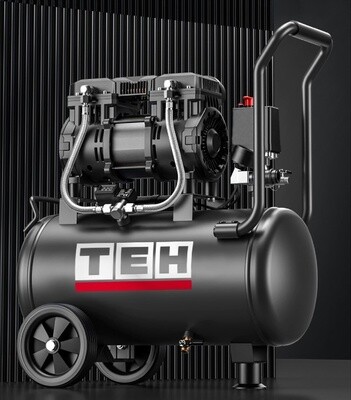
TEH 24L Oil-Free Air Compressor 1500W 2.5HP | Dual Gauge | 250 L/min | 8 Bar 116 PSI | Home & Light Trade
TEH 24L Oil-Free Air Compressor 1500W 2.5HP | Dual Gauge | 250 L/min | 8 Bar 116 PSI | Home & Light Trade
Runs Nailers, Spray Guns & Air Drills — Low Noise 70-75dB | 100% Oil-Free & Maintenance-Free.
SKU TAC24L
was £140.83
Save 14%
£120.79
Display prices in:GBP