Upto 51% OFF & FREE UK-MAINLAND DELIVERY ON ALL ORDERS
Bench Grinder Buyers Guide — What Can You Do With One?
A bench grinder is one of those workshop tools that once you have one, you wonder how you ever managed without it. Mounted permanently on your workbench, it's always ready for sharpening, shaping, and finishing tasks — no setup time, no fuss. Here's everything you need to know.
What Is a Bench Grinder Used For?
Tool sharpening — the primary use: A bench grinder is the fastest and most effective way to sharpen chisels, plane blades, turning tools, knives, garden tools, and drill bits. With practice, you can restore a sharp edge in seconds.
Metal shaping: Grind metal workpieces to shape, remove material, and clean up rough cuts from an angle grinder or hacksaw.
Deburring: Remove sharp edges and burrs from cut metal — essential for safety and professional finish.
Weld cleaning: Clean up small weld beads and grind flush on light fabrication work.
Tool restoration: Remove rust, worn edges, and damaged profiles from old or neglected hand tools — bringing them back to working condition.
Polishing: With a polishing wheel attachment, polish metal surfaces to a mirror finish.
Understanding the Two Wheels
Most bench grinders come with two different grinding wheels — one coarser, one finer:
Coarse wheel (lower grit): For aggressive material removal — reshaping damaged tool edges, removing large amounts of metal quickly, initial sharpening of badly worn tools.
Fine wheel (higher grit): For finishing and refining — final sharpening, light honing, and producing a clean edge ready for a strop.
The TEH TBG20035 350W comes with both wheels fitted — 200mm diameter, ready to use straight out of the box.
Step-by-Step: Sharpening a Chisel
- Dress the grinding wheel with a wheel dresser to ensure it's flat and true
- Set the tool rest to the correct angle — most chisels are sharpened at 25-30°
- Hold the chisel flat on the tool rest with the bevel facing the wheel
- Move the chisel smoothly across the wheel — keep it moving to prevent overheating
- Dip the chisel in water frequently — overheating destroys the temper of the steel
- Check the edge regularly — you're aiming for a consistent bevel at the correct angle
- Finish on the fine wheel for a cleaner edge
- Strop on a leather strop for a razor-sharp finish
Safety Rules for Bench Grinders:
- Always wear safety glasses — grinding produces sparks and metal fragments
- Ensure the grinder is securely bolted to the bench before use
- Keep the tool rest adjusted to within 3mm of the wheel at all times
- Never use damaged or cracked grinding wheels
- Never grind on the side of the wheel — only the face
- Allow the wheel to reach full speed before applying the tool
- Keep fingers away from the wheel at all times — use the tool rest to support the workpiece
- Never leave the grinder running unattended
TEH TBG20035 Key Specifications:
- Power: 350W
- Disc diameter: 200mm (8") — both wheels
- Speed: 2840 RPM
- Weight: 10kg — stable bench-mounted construction
- Includes: Both grinding wheels, dust bag, eye shields
On Sale
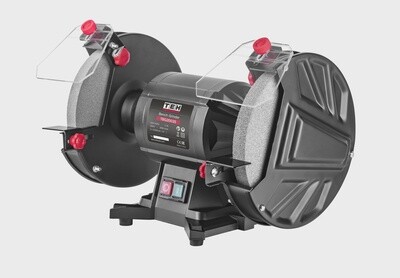
TEH 200mm Electric Bench Grinder 350W | 8" Dual Grinding Wheels | 2840 RPM | Tool Sharpening & Shaping | Garden & Workshop
TEH 200mm Electric Bench Grinder 350W | 8" Dual Grinding Wheels | 2840 RPM | Tool Sharpening & Shaping | Garden & Workshop
350W | 200mm 8" Dual Wheels | 2840 RPM | Tool Sharpening, Shaping & Polishing | Metal Safety Guards | 1 Year Warranty | Free UK Delivery PRODUCT DESCRIPTION: The TEH TBG20035 is a sturdy 350W electric bench grinder built for workshops, garages, and trade
SKU TBG20035
was £129.17
Save 45%
£70.83
Display prices in:GBP