If you've ever shopped for a rotary hammer drill or demolition hammer you've seen the terms SDS-Plus and SDS-Max. Both are SDS (Slotted Drive System) chuck formats — but they're designed for very different applications. Here's exactly what the difference is and which one you need.
What Is SDS?
SDS stands for Slotted Drive System (originally from the German Steck-Dreh-Sitzt — insert, twist, lock). Unlike a standard keyless chuck that grips a round shank with friction, SDS chucks use a locking mechanism that engages slots in the bit shank. This allows the bit to slide back and forth (for the hammer action) while remaining locked against rotation.
The result is more efficient energy transfer to the material — more impact power reaches the bit rather than being absorbed fighting the chuck.
SDS-Plus
SDS-Plus is the standard for rotary hammer drills used in light to medium construction work. The shank diameter is 10mm and bits are available in a huge range of sizes and types.
SDS-Plus is used for:
- Drilling holes in brick, block, and concrete up to approximately 40mm diameter
- Light chiselling and tile removal
- General construction drilling — fixing anchors, rawlbolts, conduit runs
- Multi-function work — drill only, hammer only, hammer drill
Typical SDS-Plus tools:
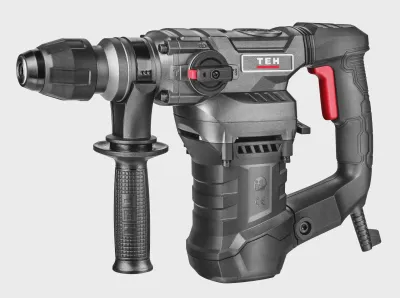
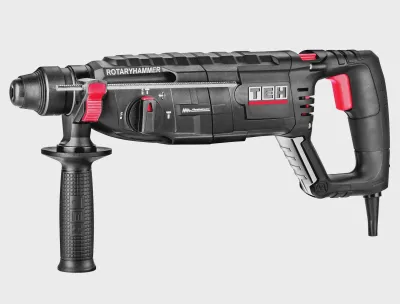
- The TEH TH3215 32mm SDS-Plus Rotary Hammer 1500W — handles up to 32mm drilling with 4350 BPM and three operating modes
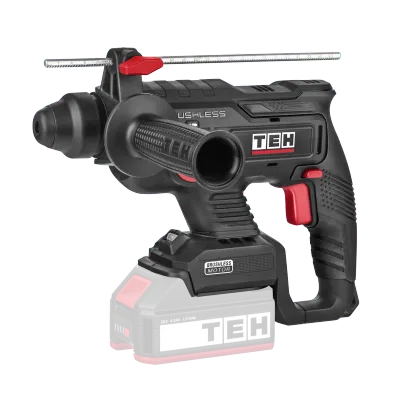
- The TEH LH160 and LH220 cordless SDS rotary hammers — cordless freedom on 20V battery system
SDS-Max
SDS-Max uses a larger 18mm shank diameter — accepting bigger, heavier chisels and core bits. It's the professional standard for demolition hammers and heavy-duty breaking work where SDS-Plus simply isn't powerful enough.
SDS-Max is used for:
- Breaking concrete floors and slabs
- Heavy chiselling in dense blockwork and reinforced concrete
- Removing large areas of ceramic and stone floor tiles
- Trenching in concrete and masonry
- Large diameter core drilling
- Any application requiring serious impact energy — 40 joules and above
Typical SDS-Max tools:
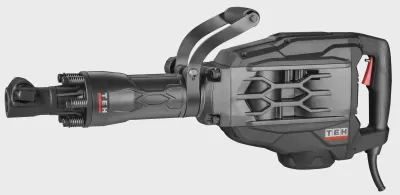
- The TEH TH9517 SDS-Max Demolition Hammer 1700W — delivers 45 joules at 2000 BPM with a D-handle vibration absorbing design and carry case
Key Differences at a Glance:
| Feature |
SDS-Plus |
SDS-Max |
| Shank diameter |
10mm |
18mm |
| Impact energy |
Up to ~8 joules |
20-80+ joules |
| Max drilling |
Up to ~40mm |
40mm+ core drilling |
| Weight |
Lighter |
Heavier |
| Best for |
Drilling & light chiselling |
Heavy breaking & demolition |
| Cost |
Lower |
Higher |
| Bit availability |
Very wide range |
Professional range |
Can I Use SDS-Plus Bits in an SDS-Max Tool?
No — the shanks are completely different sizes and are not interchangeable. Always match your bits and chisels to the chuck format of your tool.
Which Do You Need?
Choose SDS-Plus if:
- You're primarily drilling holes in brick, block, and concrete
- You occasionally need to chisel or remove tiles
- You're a tradesperson doing fixing and first fix work
- You want a lighter, more versatile tool
Choose SDS-Max if:
- You're breaking up concrete floors or slabs
- You're doing serious demolition work
- You need to remove large areas of floor tiles
- You're chasing deep channels in dense masonry
- You need 40+ joules of impact energy